Every year, the same story repeats across Indian cities. The first heavy monsoon rain hits, and within hours water backs up in bathroom floors, overflows from kitchen drains, pools on terraces and seeps through walls. Plumbers are called, walls are repainted, and within two or three years the problems return, because the real cause was never fixed.
In most cases, that cause is the drainage pipe: the wrong size, the wrong material, poorly installed, or simply too old. With intense monsoon downpours and apartment buildings that stack bathrooms on top of each other, choosing the right SWR pipe is not a small decision.
What Is an SWR Pipe?
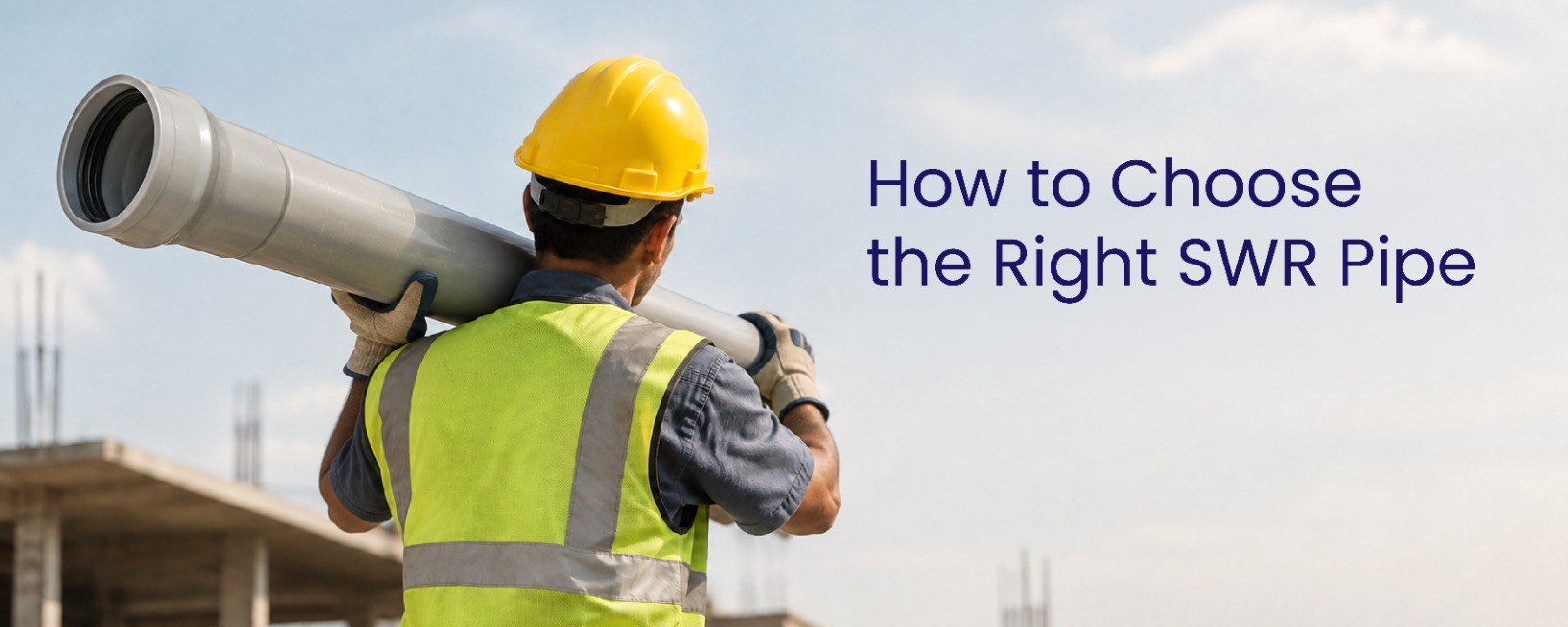
SWR stands for Soil, Waste and Rain, the three kinds of water a drainage system must handle: soil from toilets, waste water from kitchens, bathrooms and washing machines, and rainwater from terraces and balconies.
Unlike pressure plumbing, SWR systems work by gravity, so correct sizing, slope and installation are essential. Modern SWR pipes are made of UPVC, which never rusts or corrodes like old cast iron.
Common Drainage Challenges
- Intense monsoon bursts. A single storm can drop 60-80mm in under two hours, far more than an undersized downpipe can handle.
- Multi-storey buildings. Most new construction is G+4 to G+10. The main stack must carry the combined load of every floor at once.
- Ageing pipes in older localities. Drainage installed 25-40 years ago is often corroded or cracked cast iron or early-generation PVC.
- Flat terraces. Without properly sized rainwater outlets, water collects and eventually seeps through the slab.
5 Things to Check
1. Diameter: match the load
Using one size everywhere is the most common mistake. A general guide:
- Washbasin: 40mm or 50mm
- Bathroom floor trap / shower: 75mm
- Kitchen sink: 75mm or 110mm
- Toilet soil discharge: 110mm
- Washing machine outlet: 50mm or 75mm
- Balcony / small terrace: 75mm or 110mm
- Main stack / riser: 110mm or 160mm
- Large terrace / multi-flat stack: 160mm or above
A 75mm pipe where 110mm is needed will slow, back up and block, especially at peak monsoon.
2. Material: UPVC for most homes
UPVC suits Indian conditions in three ways:
- Heat resistance: it handles summers above 40°C and hot kitchen water without deforming.
- UV resistance: quality UV-stabilised UPVC lasts 25+ years on exposed terrace downpipes, while cheap PVC yellows and turns brittle.
- Chemical resistance: it withstands grease, detergents and cleaners.
3. ISI certification: non-negotiable
Look for the ISI mark under IS 13592, the standard for UPVC soil and waste systems. It verifies wall thickness, impact resistance, chemical resistance and long-term performance. Uncertified pipes look identical on the outside, but a 20% saving can lead to a repair bill ten times larger two years later.
4. Type A vs Type B
- Type A (lighter duty): internal soil and waste lines inside walls and floors.
- Type B (heavier duty): underground drainage, exposed rainwater discharge, and larger multi-storey applications.
For a typical apartment, use Type A (75mm and 110mm) for internal bathroom and kitchen lines, and Type B (110mm and 160mm) for underground drainage to the municipal sewer. Use Type B (110mm) for exposed terrace downpipes. Using Type A throughout to save cost is a false saving, since it fails faster underground or when exposed.
5. Fittings
Bends, junctions, traps and inspection chambers are the points most prone to blockage and leaks. Make sure you:
- Use fittings from the same manufacturer as the pipe, for consistent wall thickness and socket depth.
- Use swept bends rather than sharp 90° elbows, which cause blockages.
- Install an inspection chamber at every change of direction, since clearing blockages from outside is otherwise nearly impossible in apartments.
- Fit a leaf guard or wire balloon on terrace outlets, as debris is a leading cause of monsoon failures.
Champion SWR Pipes
Savera SWR pipes are manufactured in-house, not imported, and we have been supplying them since 1992.
- ISI certified under IS 13592, in Type A and Type B
- UV-stabilised UPVC for intense sun exposure
- Available in 75mm, 110mm and 160mm diameters
- Matching fittings: bends, junctions, traps and inspection chambers
- Available through our wide dealer network
Quick Checklist
Before your plumber orders pipes, confirm:
- Diameter matched to each drainage point
- UPVC material, not substandard PVC or cast iron
- ISI mark visible on the pipe, under IS 13592
- Type B for underground and exposed terrace runs, Type A only for internal lines
- Fittings from the same manufacturer as the pipe
- Inspection chamber at every change of direction
- Leaf guard or balloon on terrace outlets
- Minimum 1:40 slope on all horizontal runs
The Bottom Line
The right SWR pipe is not the cheapest one on the plumber’s van. It matches your building’s drainage load, carries ISI certification, is sized for each application, and is installed with the right fittings and slope. Where monsoon rains are heavy and buildings are tall, that decision matters more than most homeowners realise, until the first flood.
Champion SWR pipes. ISI certified. Built for everything the monsoon brings.