Every wheat farmer knows the first irrigation matters. Fewer talk about the last one, and that is where many fields quietly lose yield.
The last watering decides how well the grain fills. Get it right and you see plump, heavy grains in the ear. Get it wrong and you get shrivelled grain, lighter test weight, or a crop that has fallen flat in the field before harvest.
This quick guide covers when to give the last watering of wheat, how to give it, and how to make the job easier on your field and your pump.
When to Give the Last Irrigation in Wheat
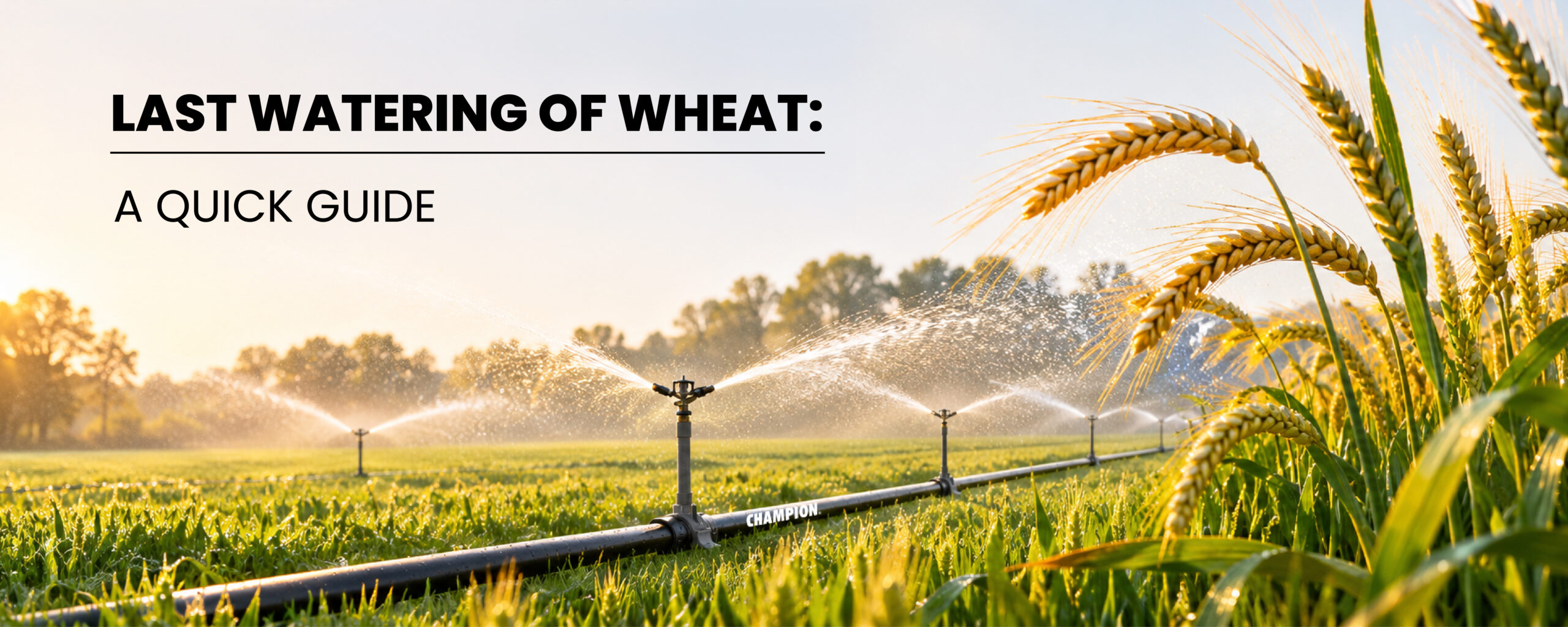
The last irrigation goes in at the grain-filling stage, when the grain in the ear moves from milk to soft dough.
Most guidance puts this at roughly 100 to 120 days after sowing. Different sources quote slightly different dates, and the exact day depends on your variety, sowing date, soil and weather. A November-sown crop usually reaches this stage in late February to March.
A simple field check helps more than counting days:
- Press a grain between your fingers. If it gives out a milky liquid, the crop is at milk stage and still needs water.
- If it feels like soft dough, this is your last irrigation window.
- If the grain is already hard and the ear is turning golden, stop irrigating.
Not sure about your variety? Your local Krishi Vigyan Kendra (KVK) can tell you the exact stage timing for your area.
Why the Last Watering Matters
At grain filling, the plant is moving everything it has into the grain. Water stress at this point can cause:
- Shrivelled, light grain, which means fewer quintals per acre
- Lower test weight, which means a lower price at the mandi
- Early forced ripening when temperatures rise in March
Skipping this irrigation to save water or time is one of the costliest shortcuts in wheat farming.
5 Tips for a Better Last Watering
1. Keep it light
By now the crop is tall and heavy at the top. A heavy flood of water makes the soil soft and the plants easier to push over. Give a light irrigation, not a deep soaking.
2. Avoid irrigating in strong wind
Wind plus wet soil plus heavy ears is the usual recipe for lodging, where the crop falls flat. If a strong wind is forecast, hold off for a day or two and irrigate once the weather settles.
3. Irrigate in the evening or early morning
Cooler hours mean less evaporation, and more of your water reaches the root zone instead of the sky.
4. Stop once the grain hardens
Once the grain is in the hard dough stage, more water does not help. It can invite disease and delay harvest.
5. Check your equipment before the rush
Late February is when everyone irrigates at once, and pumps and pipes get used hard. A leaking joint or a cracked hose at this stage wastes water and time you do not have.
Make the Last Irrigation Easier: Get the Hose Right
By the last watering, water is often scarce, power supply is unreliable, and every hour counts. A good hose setup saves all three.
Suction side (pump to water source): Your pump pulls water through the suction hose. A weak, kinking or leaky suction line means the pump struggles, loses prime and wastes electricity. The Savera PVC Suction Hose is built with a rigid PVC spiral reinforcement between soft walls, so it stays open under suction while remaining flexible enough to handle easily. It comes in sizes from 20mm to 250mm, so you can match it to your pump.
Delivery side (pump to field): Here you want a hose that carries water over distance with little loss. Lay-flat style agriculture hose is easy to roll out across the field and roll back after use, and rigid HDPE pipe works well for permanent main lines.
Things to check before the last irrigation:
- Look along the full length of the hose for cracks, bulges and thin spots
- Check every joint and clamp for leaks
- Make sure the suction hose does not kink or collapse when the pump starts
- Keep the foot valve end clear of mud and weeds
A few minutes spent on this check can save hours of lost water and pump trouble.
Quick Reference: Last Irrigation Checklist
- Crop is at milk-to-soft-dough stage (roughly 100–120 days after sowing)
- Irrigation planned for evening or early morning
- Wind forecast checked, no strong wind expected
- Light irrigation planned, not flooding
- Suction and delivery hoses inspected for leaks and kinks
- Pump and foot valve checked
- Plan to stop irrigation once grain turns hard
The Bottom Line
The last watering of wheat is small in effort but large in effect. Time it by the grain, keep it light, avoid windy days, and make sure your pump and hoses are ready before the rush begins.
Savera has been supplying hoses and pipes to farmers since 1992. If you are planning your next irrigation setup, talk to us about the right suction hose size and delivery pipe for your pump.