
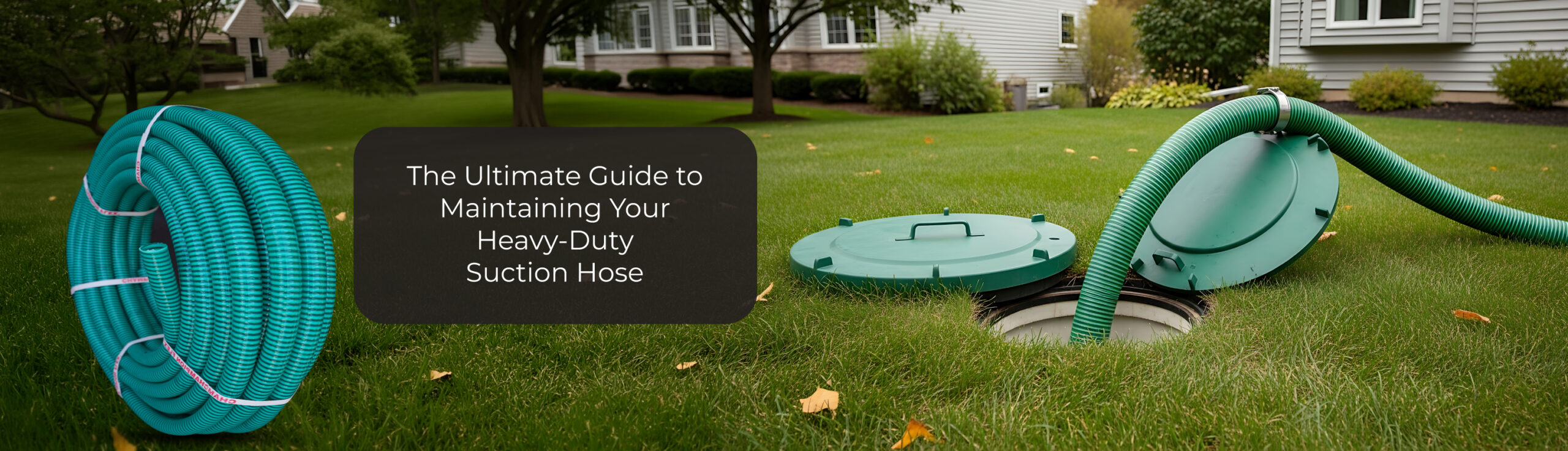
You’ve just pumped out a trench, cleaned up a muddy farm pond or shifted a large tank of water. It’s late, you are tired, and you are very tempted to turn off the pump, put the hose in the corner of the shed and go home.
We’ve all come across it and experienced it. However, by investing a few extra minutes into the proper care and maintenance of your heavy-duty vacuum hose, you can get many years out of it that will save you cash and guarantee it’s there when you need it.
A good PVC suction hose, similar to the Savera Champion, is able to withstand the abuse, but routine maintenance is far from insignificant. Your ultimate guide to maintaining your suction hose in optimal working order.
- After any muddy work, always Flush It Out. Always Flush It Out After a Muddy Job.
The suction hoses are made to take in dirty, thick water, mud and debris and not clog. But it’s not a good idea to leave that muck in the hose when the pump is turned off.
The muddy water or chemical residue can remain in the hose and cause it to dry and become coated with a layer of chemicals. This buildup will eventually cause a blockage and can help to slowly deteriorate the PVC material.
The Fix: Be sure to flush clean water through the hose for a minute or two before storing it away. The simplest solution to maintaining a smooth and efficient interior.
2. The next is Coil It Correctly (Don’t Fight the Spiral)
A true suction hose is a hose with a rigid internal spiral as opposed to a standard garden hose. This reinforcement is responsible for preventing the hose from collapsing under vacuum.
This hard structure means that it is not possible to simply fold or bend a suction hose tightly. Forcing into unnatural angles will cause internal stresses in the spiral and over a period of time, this will cause it to crack or have weak places that allow the hose to collapse.
The Fix: Always coiling the hose in wide natural coils. The hose will tell you, when coiling it too tightly it will twist or resist. The safest way is to lay it flat on the ground and to make large circles.
3. Avoid putting it in the baking sun.
Premium PVC is extremely durable and weatherproof, however, prolonged exposure to extreme conditions will end up taking its toll on all plastic and rubber products. The sun can slowly over time cause a loss of flexibility in the material if left outside for extended periods of time during summer.
The Fix: Keep your hose in a shaded area, in a garage, or a storage shed, when possible. Avoid placing it in direct sunlight, otherwise it will become brittle and crack in many years.
4. Check Your Clamps and Connections
If there is any space at the pump where air can enter, the suction hose won’t work. When air gets trapped in the connection, the pump’s vacuum pressure is lost and water will not flow. A common mistake is assuming that the hose or pump is damaged, but it’s actually just a loose connection.
The Fix: Inspect metal fittings and clamps on the ends of hose every so often. Inspect for rust, worn rubber gaskets or loose screws. After 10 seconds of tightening a clamp, you’ll have the maximum pumping power.
The Bottom Line
Your suction hose is serious equipment and used for serious jobs and situations. You ensure that it will be ready to perform when the water begins to rise by flushing it out, coiling it naturally and keeping it away from the sun.
Need some upgrades? Constructed with a heavy duty rigid spiral and top quality PVC, the Savera Champion Suction Hose provides unmatched strength and flexibility for farming, industrial use and emergency water clearing.
